Today, Wuxi Rihuan Sensor Technology Co., Ltd. will introduce to us how to select the "power-off state" of the security door lock? Is it power-off unlocking or power-off locking?
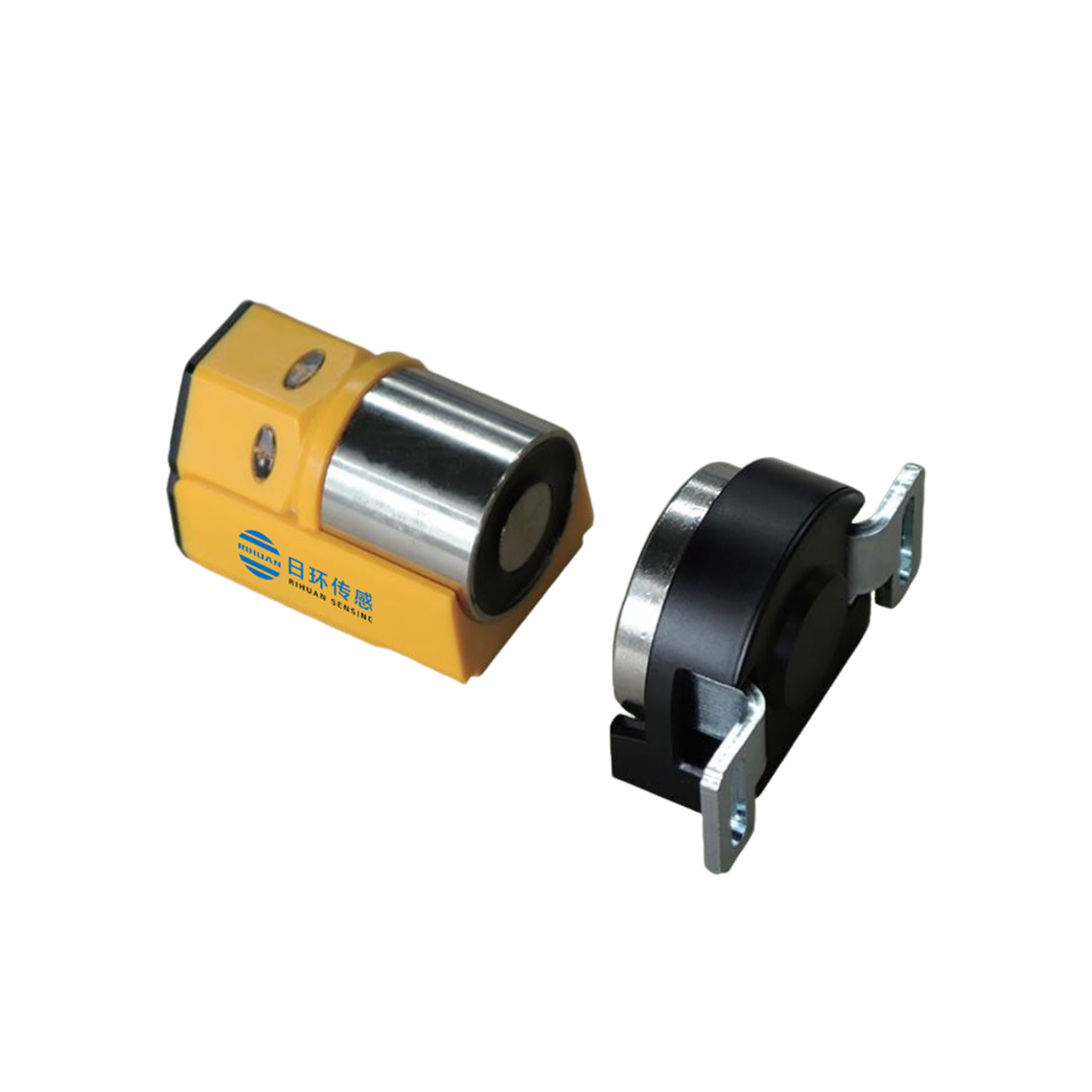
In the selection of industrial safety door locks, there is a crucial but often overlooked issue: when the equipment is powered off, should the door lock automatically open or automatically lock?
This choice does not have a standard answer. It depends on the risk scenarios and safety goals of the equipment. If the wrong choice is made, it may only affect production efficiency, but in severe cases, it could lead to casualties or property damage.
The definitions of the two modes
The security door lock, based on its state after power failure, is mainly divided into two basic working modes:
Power-off unlocking (Fail-Safe / Power-on locking)
Working principle: During normal operation, the lock body remains powered on, maintaining the locked state; when power is cut off, the lock tongue automatically retracts, and the door lock is opened.
Safety concept: Prioritize ensuring the safety of personnel evacuation. In the event of power failure or malfunction, the door will automatically open to facilitate the emergency evacuation of personnel.
Power-off locking (Fail-Secure / Power-on unlocking)
Working principle: When operating normally, the lock body does not receive power and remains in the locked state; when powered on, the lock tongue retracts and the door lock is opened.
Safety concept: Prioritize ensuring the safety of the area or property. In the event of power failure or malfunction, the door will automatically lock to prevent unauthorized personnel from entering.
The core differences between the two modes
Comparison items Power-off unlocking (Fail-Safe) Power-off locking (Fail-Secure)
Normal state Continuous power supply to maintain locking No power supply to maintain locking
After power failure Door opens Door locked
Safety priority Safety for personnel evacuation Safety for the area/property
Typical scenarios Escape routes, emergency exits Equipment rooms, data centers, vaults
Detailed explanation of applicable scenarios
Power-off unlocking applicable scenarios:
Escape routes and fire doors: In case of power failure during emergencies such as fires, the doors will automatically open to ensure that people can evacuate quickly.
Areas that require priority protection for personnel safety: such as safety exits in workshops, public passageways, etc.
Power-off locking applicable scenarios:
Equipment room, distribution room, control cabinet: After power outage, prevent unauthorized personnel from entering to avoid accidental operation or equipment damage.
Data center, archives room, finance office: The doors will automatically lock when the power is cut off to prevent theft of property or leakage of data.
Vault, high-value goods storage area: Remain locked after power outage to ensure the safety of assets.
Selection Considerations
First, safety priority is the core criterion for judgment. Is this door an escape passage? In the event of power failure, must it be able to be opened (power failure unlocking) or must it be locked (power failure locking)?
Secondly, when using power-off locking for escape routes, an emergency release device must be installed. If a power-off locking type door lock is to be used in the escape route, mechanical release devices such as emergency glass-breaking buttons must be equipped to ensure that the door can be manually opened from the inside in case of an emergency.
Thirdly, in the field of industrial safety, the "dual-stable" principle can also be adopted. The dual-stable safety door lock remains in its current position even when the power is off - neither will it automatically open nor will it automatically lock. This design is suitable for scenarios where the current locking state needs to be maintained after a power outage, and where neither opening the door nor accidental locking someone is allowed.
Fourth, refer to relevant safety standards. The EN ISO 14119 standard "Mechanical Safety - Interlocking Devices Related to Protective Devices - Design and Selection Principles" clearly defines the classification and selection requirements for interlocking devices with protective locking. When selecting, it should be based on the risk assessment results of the equipment.
Summary
Power-off state Core principle One-sentence advice
Power-off unlocking People priority Choose the escape route or emergency exit
Power-off locking Property priority Choose the equipment room or data center
Bi-stable state Keep the current state When power is off, it is necessary to maintain the current state. Choose it
The selection of power-off states for security door locks essentially involves making a choice between "people's escape safety" and "property safety in the area". There is no right or wrong; it only depends on whether it matches the risk scenario. Before making the selection, ask yourself this question: When power is off, what do I worry about the most - that people can't escape or that the property is stolen?
Rihuan Sensor offers a full range of industrial security door locks, including power-off unlocking, power-off locking, and dual-stable states, covering various working modes suitable for different risk levels and application scenarios. Welcome to follow Rihuan Sensor to obtain professional selection advice and technical support.