Today, Wuxi Rihuan Sensing Technology Co., Ltd. will introduce the working principles and application differences of magnetic induction sensors and Hall sensors to all of us.
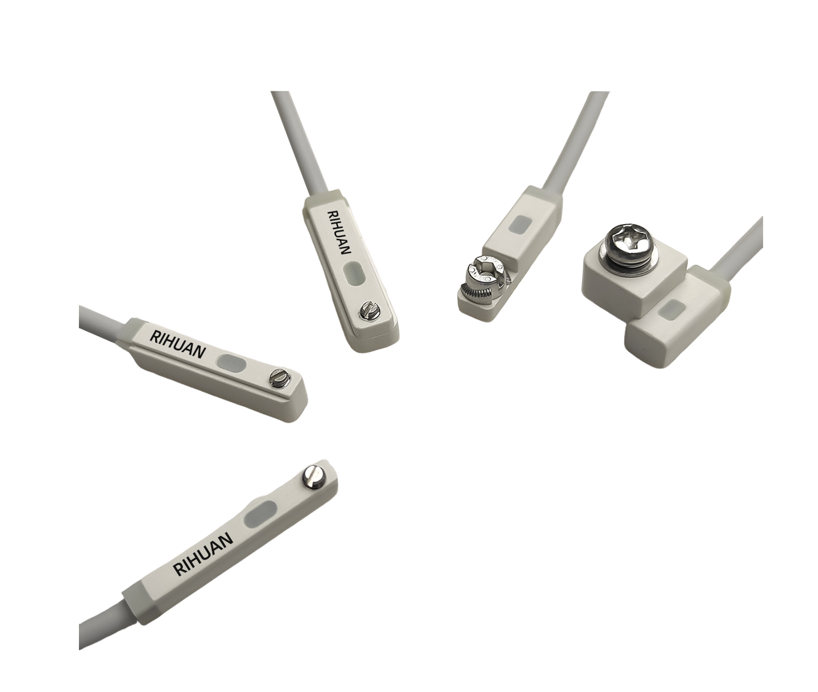
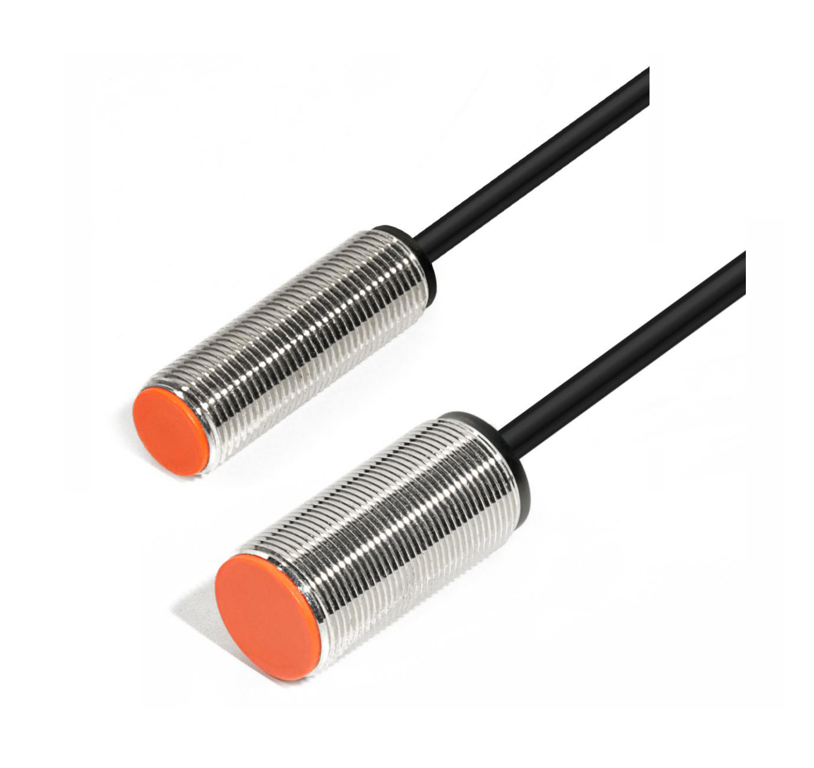
In the field of magnetic field detection, magnetic induction sensors and Hall sensors are two common types of devices. Although both can sense magnetic field signals, there are significant differences in their working mechanisms and typical applications.
1. Differences in Working Principles
Magnetic induction sensors operate based on the law of electromagnetic induction. They typically contain coils and magnetic core structures inside. When the external magnetic field changes, the magnetic flux passing through the coil also changes, thereby generating an induced electromotive force at both ends of the coil. By measuring this electromotive force, the changes in the magnetic field can be determined. This approach essentially responds to the rate of change of magnetic flux, making it more suitable for detecting dynamic or alternating magnetic fields.
Hall sensors utilize the Hall effect. When a semiconductor (the Hall element) carrying an electric current is placed in a magnetic field, the charge carriers will be deflected by the Lorentz force, causing charges to accumulate on both sides of the element, resulting in a lateral electric potential difference - the Hall voltage. The magnitude of this voltage is proportional to the magnetic induction intensity, so by measuring the Hall voltage, one can directly obtain information about the strength of the static or dynamic magnetic field.
II. Distinction of Typical Application Scenarios
Due to differences in principles, the two types of sensors have their own advantages in practical applications.
Magnetic induction sensors are adept at capturing the changes in magnetic fields and are commonly used in metal object detection (such as security gates and metal detectors), detection of the presence of magnetic materials, and industrial scenarios where the intensity of magnetic field fluctuations needs to be measured.
Hall sensors can provide a stable output signal that is linearly related to the magnetic field strength. Therefore, they are more suitable for applications that require continuous measurement or position feedback, such as rotor position detection in brushless motors, vehicle speed and rotational speed measurement, current sensing (by measuring the magnetic field around an energized conductor), and non-contact switches, etc.
III. Summary
In simple terms, if one needs to detect "whether the magnetic field has changed and how it has changed", the magnetic induction sensor is a more direct choice; if one needs to measure "how strong the magnetic field is and where it is located", the Hall sensor has more advantages. These two are not mutually exclusive; rather, they are used in combination based on specific requirements.
In today's era of increasingly refined magnetic sensing technology, choosing the right and reliable sensor solution is of utmost importance. Rihuan Sensing is dedicated to providing high-performance magnetic induction and Hall sensing solutions, using stable and precise products to support industrial automation and intelligent detection applications. Welcome to follow Jihuan Sensing and obtain more professional support.